

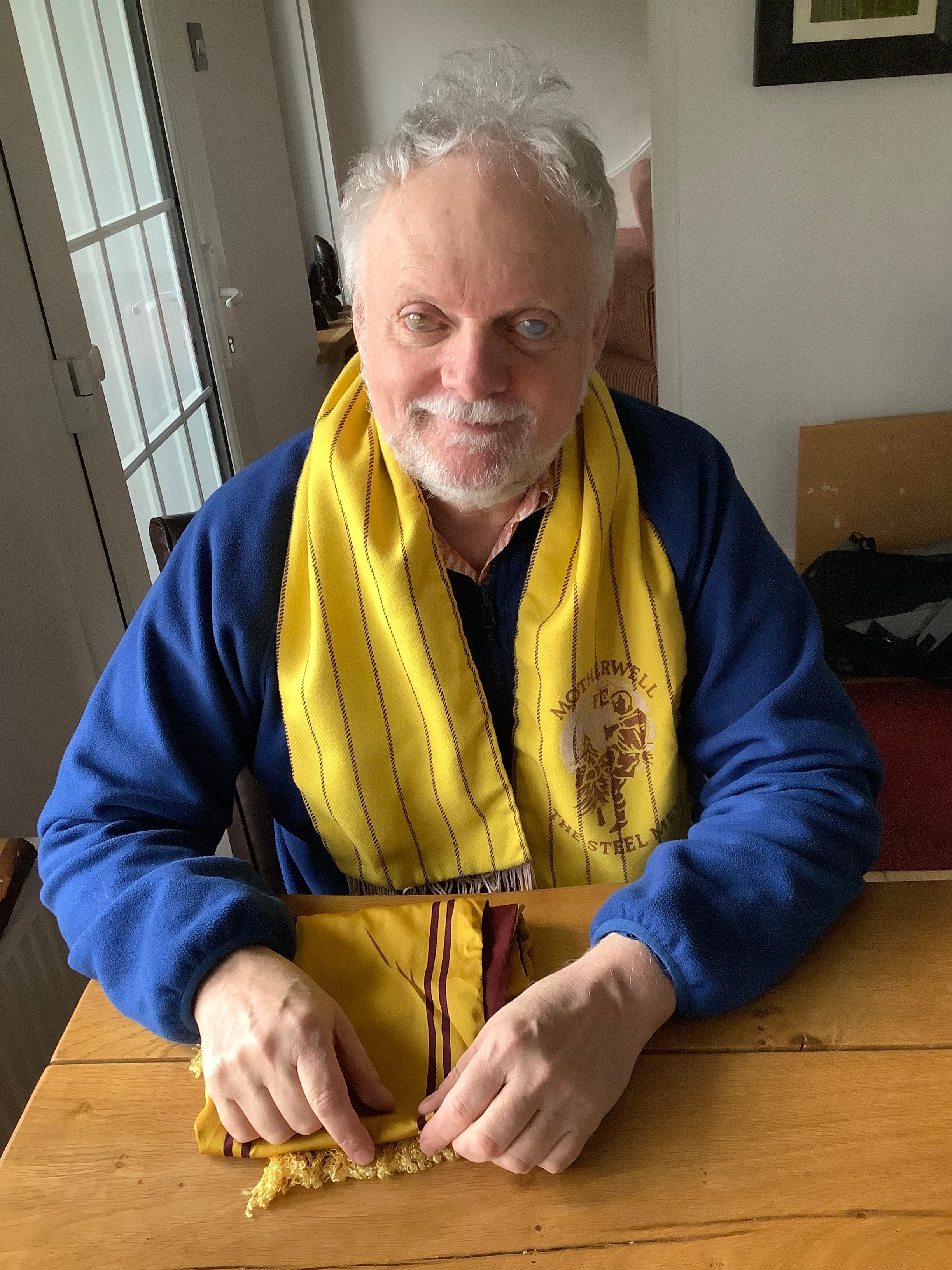
This week's blog isn't about football in the usual sense. I'm not talking about the action on the pitch, but rather how blind fans experience the game, a perspective that's as unique as it is fascinating. For those in North America, I'm referring to football in the way the rest of the world does, what you call soccer.
Almost 90 years ago, Scotland became the birthplace of football commentary for blind fans. It was New Year's Day 1937 when football commentary for the blind made its first-ever appearance. The man behind it? R.E. Kingsley—a journalist, a broadcaster, and someone who clearly didn't believe in doing things the usual way. Kingsley was the person behind what became known as the "Rex blind parties," setting up live commentaries for visually impaired fans at grounds across Scotland. The name 'Rex' came from his signature in the Sunday Mail, a popular Scottish newspaper where he was a well-known journalist.
Kingsley also became Scotland's first BBC football commentator, but the story goes that the whole venture started by chance. While watching a game at Dens Park in Dundee, he overheard a man struggling to describe the action to two blind supporters. The commentary was about as clear as a foggy morning on the Tay. So, Kingsley stepped in and took over for the second half. That simple act sparked the beginning of the Rex blind parties.
In late 1937, he set up the first blind party. He took a group of twelve blind men from the Glasgow Royal Blind Asylum, as it was known then, to a Third Lanark v Hearts game and gave them his own live commentary. Not just the action on the pitch - he also described everything: the setting, the pitch, whether it had a slope. Proper description.
Kingsley passed away in 1974, but his legacy lives on. Today, over 200 blind fans tune in to Rex commentators at Scottish stadiums every week.
How It Works
The gatherings vary. At bigger clubs, there might be 40 or more people listening in, while smaller teams attract just a handful of dedicated fans. Regardless of the crowd size, the Rex organisation works hard to provide a commentary that uniquely suits its audience. In fact, plenty of professional commentators got their start with the Rex setup. Scotland, it turns out, has been ahead of the game when it comes to making football accessible, long before accessibility was even a talking point.
I first came across blind football commentary in the mid to late 1970s when I went to see, well, listen to, Motherwell play in Lanarkshire. Known as the Steelmen, a nod to the town's industrial past, Motherwell had some cracking players back then, like Peter Marinello, Willie Pettigrew, and Vic Davidson.
At Fir Park, a man named Bob Allen provided the blind commentary. He sat in the main stand, surrounded by a huddle of blind fans, giving a blow-by-blow account of the match and anything else worth noting in the stadium. His style was refreshingly passionate, no neutral radio voice here. Bob was a true Motherwell supporter, and it showed. When Motherwell scored, he'd jump up with excitement, then sit back down, grinning like a kid on Christmas morning. His enthusiasm was infectious.
That's what made Bob's commentary special. He wasn't neutral. He saw the game through the eyes of a fan. Sure, he could be critical, but he never lost that local flavour. He was one of us.
The Evolution of Blind Commentary
Technology has come a long way since those early days. Commentators now use microphones and wireless transmitters, meaning blind fans can sit anywhere in the stadium, listening on small receivers. No need to be bunched together in one section—unless, of course, they want to be.
I've experienced a fair few blind commentaries over the years. The first one outside Scotland was in 1980 at a Torquay vs Halifax United match. It was so dull I actually nodded off for 15 minutes, possibly the only highlight of the afternoon. Then there was a trip with my mate Mark, a die-hard Charlton Athletic fan, to watch Charlton play West Ham. The game had a blind commentary service, but it was terrible. For the first 20 minutes, we had no idea which way Charlton were attacking. We had to rely on subtle clues, like the sound of goal kicks, to piece things together. It made me realise just how much we take basic visual details for granted. That commentator either needed replacing or a serious retraining session.
These days, I don't go to matches as much. I've covered plenty of football stories for work, but I haven't been to a Motherwell game in years. Truth be told, I prefer listening on the radio. Sitting in a freezing stand has lost its appeal. There's something satisfying about staying warm at home, listening to the match, and keeping the kettle on standby.
Am I a Motherwell supporter? Not really. I don't buy a season ticket or a replica shirt, and for me, that's what makes a true supporter. The clue is in the word "supporter". I'm more of an armchair fan, and I'm perfectly happy with that.
After I wrote this I found my Motherwell scarves..both of them about 50yrs old!